
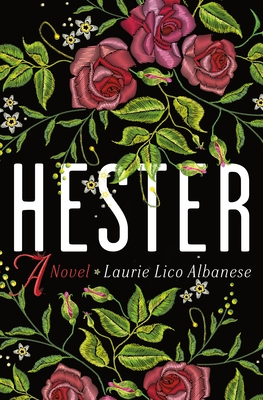
When I read Hester’s blurb, I knew I had to have it. I hit the “make book of the month” button with such speed, it’s only a miracle I didn’t break a finger. The Scarlet Letter was one of my favorite books as a teenager, I’m obsessed with New England’s witchcraft trials, and I also have synesthesia. To boot, I feel like I haven’t read a historical fiction in what feels like eighty years. No brainer, right? I tried to manage my expectations, as I am often prone to bouts of over-excitement, and then tend to end up disappointed. Fortunately enough, Hester lived up to my expectations. And then some!
Isobel Gamble is a young seamstress carrying generations of secrets when she sets sail from Scotland in the early 1800s with her husband, Edward. An apothecary who has fallen under the spell of opium, his pile of debts have forced them to flee Edinburgh for a fresh start in the New World. But only days after they’ve arrived in Salem, Edward abruptly joins a departing ship as a medic––leaving Isobel penniless and alone in a strange country, forced to make her way by any means possible.
When she meets a young Nathaniel Hawthorne, the two are instantly drawn to each other: he is a man haunted by his ancestors, who sent innocent women to the gallows––while she is an unusually gifted needleworker, troubled by her own strange talents. As the weeks pass and Edward’s safe return grows increasingly unlikely, Nathaniel and Isobel grow closer and closer. Together, they are a muse and a dark storyteller; the enchanter and the enchanted. But which is which?
In this sensuous and hypnotizing tale, a young immigrant woman grapples with our country’s complicated past, and learns that America’s ideas of freedom and liberty often fall short of their promise. Interwoven with Isobel and Nathaniel’s story is a vivid interrogation of who gets to be a “real” American in the first half of the 19th century, a depiction of the early days of the Underground Railroad in New England, and atmospheric interstitials that capture the long history of “unusual” women being accused of witchcraft. Meticulously researched yet evocatively imagined, Hester is a timeless tale of art, ambition, and desire that examines the roots of female creative power and the men who try to shut it down.
It’s hard to put into words the many layers of Hester. Isobel’s story is bleak—from her humble beginnings in Scotland and the helplessness that leads her over seas and into a new life. It paints a dreary picture of a life spent dependent on an unreliable spouse and a society that holds no grace for women.
It goes without saying that this isn’t a story to read if you’re looking to feel good. This isn’t a tale of love unending or a happily ever after. It’s about how, in a period of true adversity, Isobel penned her own story. She made her own ending. When life punished her for her naivety, she picked up the pieces and forged ahead. To me, this story was about strength. True strength.
I shed a few tears. I got angry. Hester made me feel, and that, to me, is a mark of a truly wonderful story.
I found the writing engaging and stunning, which made up for the places where the pacing dragged a bit.
It’s been a few months since I first read Hester, and I know it’s a book I loved because my eyes are drawn toward its spine every time I enter my office. I often think about picking it up again.
I can imagine that this book wouldn’t be for everyone. It’s heavy, and needles into wounds we all have. It’s raw, it’s timeless, and it will go down in memory as one of my all-time favorite books.
No notes.
You can find Laurie Lico Albanese: Facebook, Goodreads, Instagram, Twitter, and Website.
If you liked this blog, please give it a like, a comment, and share it with your friends! It really does help a lot! For more blogs like this, subscribe below to be notified of my next post! You can also follow me on Instagram, Twitter, like my Facebook Page, or follow me on Goodreads! If you like my work, and you’d like to support me on Patreon, you can find me here!
 Ivy Whitaker